
Sarah Catlow – Marjon University

Tell us a bit of background about yourself and your interests… (How did you get into the industry? What made you want to become a Therapist/Teacher?)
Throughout my professional career, I have been dedicated to the field of education, having taught at Universities and Further Education colleges. Alongside my teaching roles, I have also worked as a sports therapist, working with both professional and amateur sports teams. Why did I Become a University lecturer within Sports Therapy? I had a desire to continue learning and growing within the area of Sports Therapy and teaching at the University can allow me to do this as well as contributing to the growth and development of others. Also working as a lecturer allows me to pass on my expertise to the next generation of sports therapists and make a wider impact on the field.
What do you enjoy most about your job as a Therapist/Teacher?
As a University lecturer, I enjoy inspiring my students to achieve their full potential and reach their academic goals. It is rewarding for me to see them motivated and engaged in their learning, and to witness their progress as they gain new knowledge and skills. I find it satisfying when I am able to facilitate a breakthrough moment for a student, when a concept or idea finally clicks for them and they are able to apply it successfully. I also take pride in contributing to their personal and professional development, and in helping to prepare them for their future careers.
Are there any challenges you have had to overcome as a Therapist/Teacher? How have you overcome these?
As a lecturer, one of the challenges I face is striving to achieve a better work-life balance. There always seems to be something to do, whether it’s responding to emails, preparing lectures or assisting students. This can lead to long hours. However, I am continuously working to find ways to manage my workload more effectively to ensure that I am able to maintain a healthy work-life balance.
What is your seminar about and what can viewers expect to come away with?
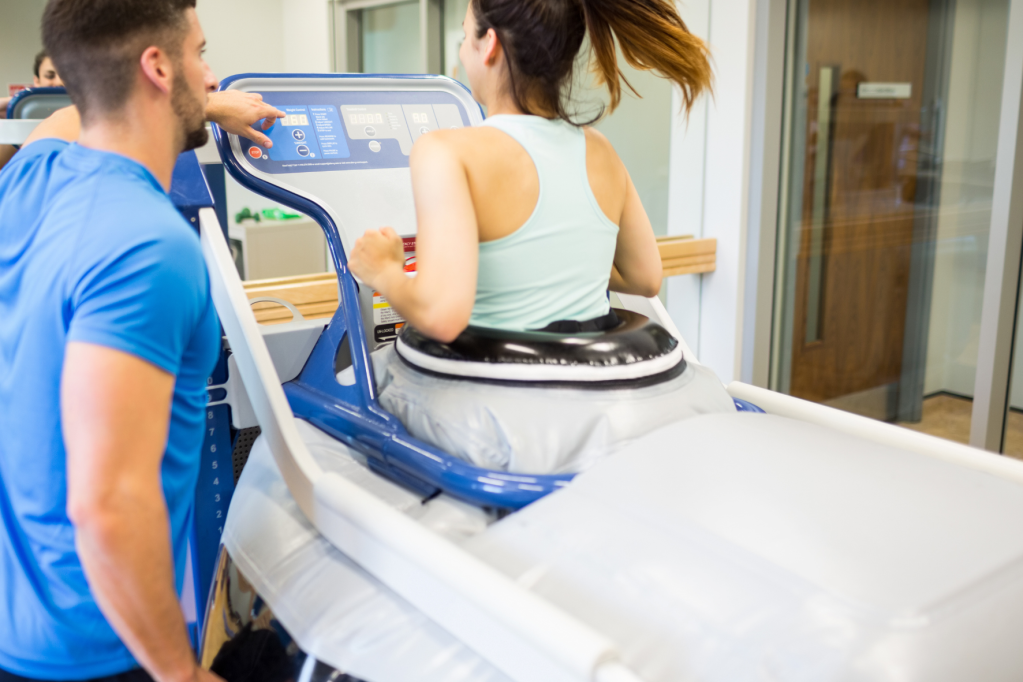
The focus of my seminar is on the anti-gravity treadmill and how it can be used within rehabilitation. By the end of the seminar, attendees will have a greater understanding of the versatility of this tool and the various ways it can be used to aid in recovery and rehabilitation for athletes and patients alike.
What is it about your topic that appeals to you and why is it useful for Therapists?
As a sports therapist, the use of innovative and effective treatments to help clients recover from injuries and improve their performance is essential. The anti-gravity treadmill has been shown to be an effective tool in rehabilitation and can benefit a wide range of clients. Its use appeals to me because it allows me to apply evidence-based practice to my treatment decisions and tailor the rehabilitation process to the individual needs of each client. Furthermore, it provides a low-impact, supportive environment that can help clients regain strength, mobility and endurance, and ultimately return to sport or activity with greater confidence and improved performance.
What is one piece of advice you have or have received for Therapists wanting to develop their Therapy practice?
One piece of advice for therapists wanting to develop their therapy practice is to continually seek out opportunities for learning and professional development. This could include attending conferences, workshops, and trainings, as well as staying up to date with the latest research and developments in the field. By investing in your own education and skillset, you can not only improve the quality of care you provide to your clients, but also differentiate yourself in a competitive market and build a reputation as an expert in your area of specialization.
What do you consider to be the most important traits and skills for a therapist to have?
Empathy: The ability to understand and connect with a patient’s emotions and experiences.
Active listening: The capacity to listen attentively and respond to the patient’s concerns.
Communication skills: The capacity to communicate effectively and efficiently with patients and other healthcare professionals.
Critical thinking: The capacity to identify problems, analyse information, and evaluate possible solutions.
Continuous learning: The capacity to remain up-to-date with new research, technologies, and best practices.
Do you have a goal for 2023?
In the coming year, I have set several personal goals to strive for. I aim to prioritize self-care and extend kindness towards myself every day. I want to travel to new destinations and immerse myself in diverse cultures. Additionally, I plan to prioritize my physical health by focusing on losing a couple of pounds. Lastly, I want to consciously cultivate positivity in my life, by smiling more and appreciating the wonders of the world around me.
 FHT Blog
Leave a reply